Tuesday, 26 February 2013

F for Fabulous


Know what I love about this set of small islands of ours? You never quite know what will be found or turn up. Hoards of Anglo Saxon jewellery; a village lost to a reservoir in a drought; a concealed room in a great house with no doors; a long lost King under a provincial car park.

I once saw an exhibition at the Museum of London, the title of which I forget, but it was all about the way Londoners have died – what archaeologists, geneticists and others have gleamed from their remains. It was fascinating. But as interesting and often pitiful as the skeletons were, they were not the most compelling, thought provoking or thrilling element. 

Each skeleton or exhibit was accompanied by a large photograph on a light-box. One, for example, was of a low red-brick wall, pot-holed tarmac, litter and a defaced road sign on a street corner. It was totally unremarkable and remarkable in that respect. Yet it recorded the place where one of these medical puzzles was found. The images were stark, some might even say boring, but they made the point beautifully, that being that in this town we are walking on history – we literally never know what is under our feet…waiting.

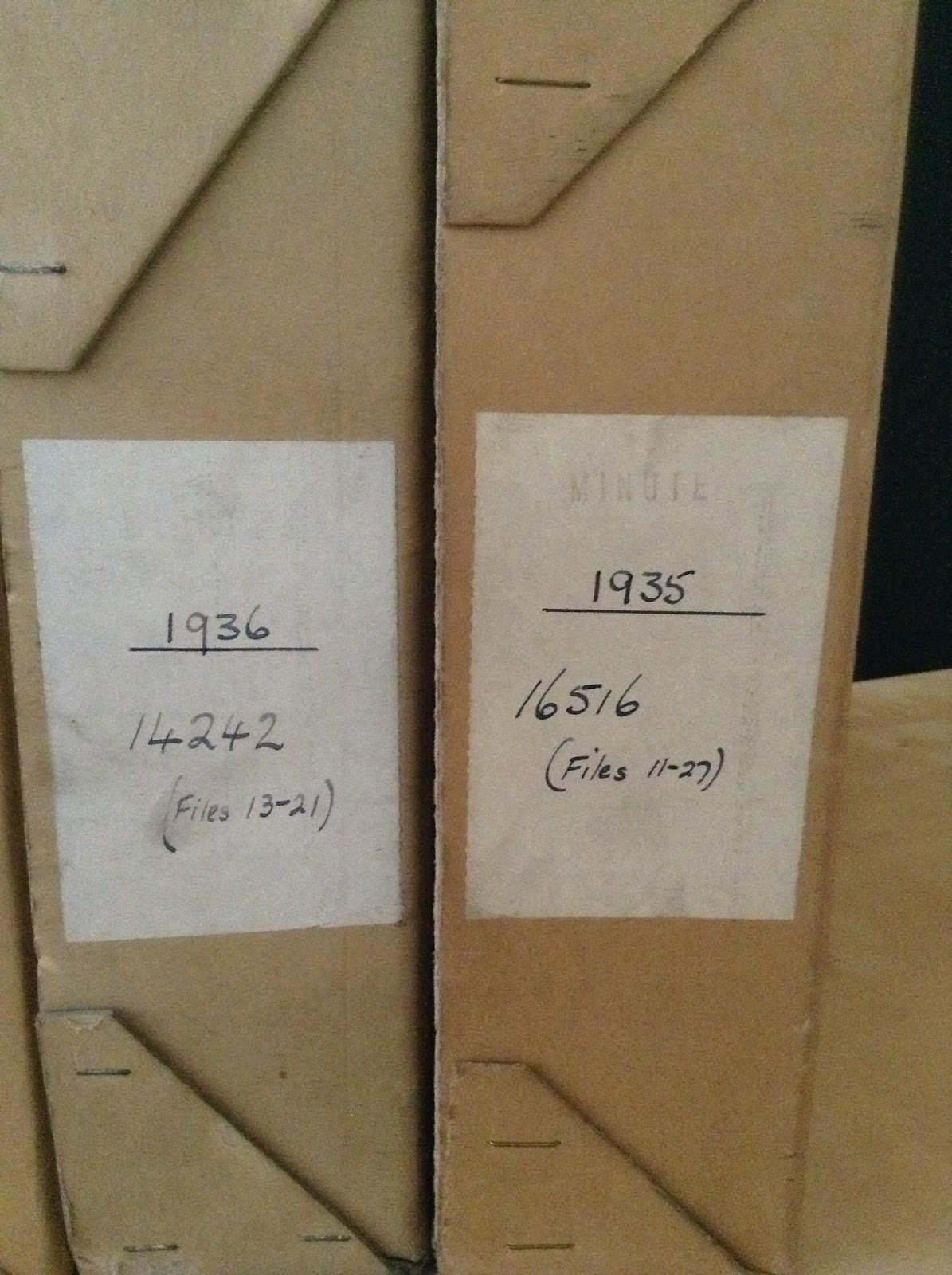
This morning history was on the pavement waiting for the bin men. It was a large transparent sack of box files. Not your run of the mill variety, but the hardboard and staple variety, the kind kids of my generation had in junior school to house our jotters, Helix rulers, vocabulary books and Mars Bars, so I stopped to take a closer look. And I’m glad I did.

I saw that each of the boxes had a utility-type label, which had been created with pen and ink. I’ll type that again. Pen and ink! These were old boxes and early objects of recycling, since the other side of the boxes has a patchwork of newer labels, each representing different strata of GPO / BT administrative history. Here they are. 
File them under fabulous.


Monday, 25 February 2013

Brand Bollocks


A mind-boggling ten years ago (where does time go?) I wrote a little book called Brand Bollocks (BB). It was a rant about the pretentiousness, excesses and in some cases, the sheer ridiculousness of the branding world. I wrote it because it became near impossible to pick up a newspaper without reading caustic columns about the latest rebranding exercise or the fees paid to consultants for shifting a shape a couple of millimetres or changing a colour. It got to the point where admitting involvement with brands was to attract distain and derision. Not much has changed.


This in part was and still is because of a fundamental lack of understanding of the processes involved, the value of what we do, or indeed the magic involved. It’s also the result of the total bollocks that some insist on spouting – the ones who would secretly prefer to wear white coats – the ones who, as Martin Lambie-Nairn put it, “want to turn it into a science.”

I sent it to clients, peers, friends and those in the media who frequently wrote about their detestation of people like me. People like Kelvin Mackenzie, who (having established on the phone that I was indeed “that Bollocks Woman”) invited me to lunch. Very nice it was too and I’m happy to report that he is as advertised, since it’s always so very disappointing when people are not.


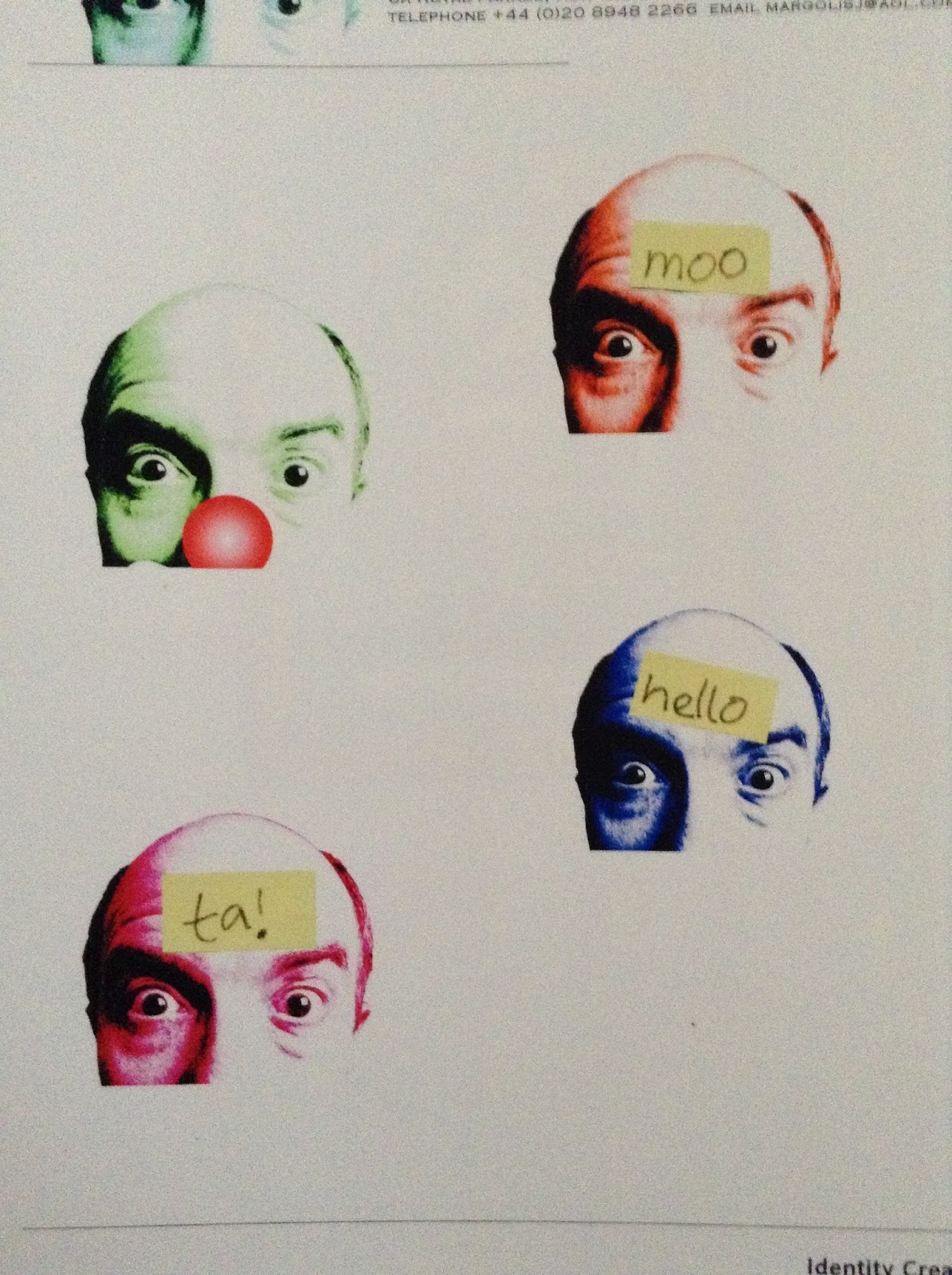
And to people like journalist, Jonathan Margolis, who first wrote about BB in the Financial Times magazine How to Spend It and then followed up with a DPS in The Independent, the purpose of which was to demonstrate how the branding process worked. 


BB is as relevant today as it was then. I’m in the process of revising and updating it because I intend to release it as an eBook. As you know my archive was trashed a while ago and so the images in this post are culled from a pdf, so my apologies for their less than perfect appearance, but they can be read...I hope. If for some reason the show below doesn't work and you can't read the pages, message me and I'll send you a pdf. I produced two versions, this and one titled, Woolly Brand Bollocks, in which the illustrations and covers were knitted. But unfortunately that’s now in brochure heaven.


Wednesday, 20 February 2013

Ear. Look at this...


Some time ago I wrote about a piece of Sony's pre-digital kit I'd spied in a shop in central London. The post was entitled, A hod for your ears. When I first saw it I stupidly forgot to take a picture, because it has to be seen to be believed and remembered. And, alas, it was removed and replaced with another piece of less interesting kit shortly afterwards. But now, hurrah, it's back. And so, being better equipped, I took a shot. Gigantic or what? Look at it. That's a big baggy bloke's mac it's dwarfing. 


This week began with the latest salvo in the war against obesity, particularly in 'yoofs'. Given that they are glued to their 'sounds', perhaps a better strategy than counting calories would be enforced substitution of their iPods, iPads and phones for one of these things for a determined period of time. Lugging this mother around for a week is sure to banish the muffin tops. Well, at least reduce them from a pack of six to four.

Monday, 18 February 2013

Bags of memories

My Gran had a rusting can of Andrews in the far reaches of her bathroom cabinet. It had been there so long it had its own orbit rings of oxide, each a reminder of the 'do' or 'bad stomach' that necessitated its extraction. I hated it then, because it wasn't the tin I was used to seeing in the shops. It was an earlier incarnation. It wasn't modern. Callow, superficial youth! Of course I'd now saw my own head off to get my hands on it because I now know better.

Most homes are to some extent museums of the everyday, where the present coexists with the past. Each cupboard as instrumental in marking our progress through life as the pencil markings on the door jamb that charted our growth. The bulk-buy because Flash was on offer and two years and several design changes later you still have half of it left. The sweet wrapper accidentally pushed behind the cooker, or purposely used as wall filler (we've all done it). The former rediscovered laminated in fat years or decades later. The latter perhaps remaining for decades like a cat bricked up in a chimney (it was milk chocolate after all). And when we discover them again we're transported, sans Tardis, back to events, happenings and people. Smells, textures and emotions. They're the closest thing we have to time travel.

Last autumn I moved house and on removing kitchen drawers for cleaning etc I found a handful of bags, all caked in dust, and all had been sitting there for over 40 years. 

And people ask 'what remains to be discovered?' 

Everything.

I thought you'd like to see them.


Monday, 28 January 2013

On being dumped...


What’s the worst thing that could happen to you? 
Leaving the loo with your skirt caught up in the top of your tights? (Once saw that happen to some poor soul in the very busy foyer of New Scotland Yard.) Finding a clump of hair in your breakfast mushrooms on the train? (Sure did, on the Pullman up to Preston. Ask Piers Rutterford. He was there.) Driving off with your purse on the roof of your car? (Did that once, from Safeway at Camberwell Green to home on Camberwell Grove – just like in the Nat West ad – and yes, people at bus stops were shouting and pointing at me and miraculously it was still sitting there when I got home.) Or phoning your (then) paramour, wonder why he’s out of breath, and then twig that he’s in the middle of sha*ging someone else? (Yep, it was a fair while ago, but another box ticked nevertheless.)
 
What’s the worst thing that could happen to you if you’re a designer, photographer, writer or a painter – indeed any profession where you are defined by your produce? And the answer is…you lose it. Guess what?
I just ticked another box.
 
Any designer will tell you that you collect a huge amount of stuff during the course of one year let alone 29. Pieces of print, direct mail, posters, invitations, packaging – and that’s just the finished ‘live’ stuff.  Add to that the roughs, mock-ups and the job bags pregnant with the ones that got away. If you’re similarly aged, then there will be a lot of paper from the pre-digital years. You like me will be in possession of your very own Museum of Was. Then there are the disks, floppy, Zip and so on. Where do you put it all?
 
Some years ago I struck-up a deal with a chap who owned a number of storage units in South London and I bedded it down in there, with Clever Dog as a comforter. I made visits now and then to retrieve things or to replace them and generally show my face. The last time I showed my face was about 6 months ago, but last week I decided to show it again only to discover that the chap had sadly died and that his units had been cleared out!
 
When I heard that I got that strange taste in my mouth, the one you get when you trip up on a flagstone or almost miscalculate the kerb and fall flat on your face – adrenaline – a whole keg of it. My archive!!!!
A little detective work revealed that this man had no family and there was no paperwork since it was a personal agreement, so the contents had either been sold or dumped.
 
Twenty nine years-worth of work, seven years of college projects, award certificates, mementoes of people and companies past, photographs (professional and personal) and 35m films and disks…all gone. All that remains is an A4 book of digital prints I had at home.
 
It’s a bit like trying to prove your identity when your passport is lost or stolen, because those pieces of paper, plastic and celluloid defined me. They provided the evidence to support the litany of activity presented on my CV. And each project was infused with memories of my working and personal life and laminated in Letraset, Cannon colour copies, rubylith, acetate, rendering, axonometric drawings, tracing paper and the rest.
 
Product + Personality.
Only one remaining.
So what now?
Start again. What else?
New balls please.


Tuesday, 8 January 2013

150 not out


 “Wow.” “Cool.” “Awesome.” No, not me doing my ablutions, but a gaggle of American visitors who on spying the giant roundels marking the subterranean entrance to Chancery Lane tube, broke into a fast trot with smartphones aloft as if in salute. It was love at first sight. They took it in turns to snap and film each other whilst trying to get as close to the roundel as possible. They were hugging it. This was their proof. They’d been here. You can’t argue with the roundel.

It’s a familiar scene, one I’ve seen played out many, many times with visitors from just about everywhere. Sometimes I may not have understood what they were saying, but then sometimes you don’t need to understand what is being said in order to understand what is meant. It’s about provenance. It’s about validity, trust and originality. Nothing says ‘London’ like the roundel does – not even red phone boxes or red busses 
 and so for our visitors it’s a badge of authenticity.

We may walk by it or ride on the system several times any given day without giving it all a second thought. But by jingo we’d miss it if it wasn’t there. Anyone who has left London and ‘gone-back-to-where-they-came-from’ in the UK, if only for a visit, will acknowledge that when subjected to the vagaries of the average provincial bus/train/mini-cab service. They say there are no alien lifeforms. They’re lying. They're here and they all work as mini-cab drivers in Barnsley.


We love it. We hate it. We love it. It’s great. It’s a f*ck-up. But it’s our f*ck-up, and deep down – around the same level as the Brunel tunnel – we have a soft spot for it, that network of arteries that carries the lifeblood of our city. That’s you…and occasionally me.


Every designer and art director wants to design a poster for the Underground, it’s a dream brief. Why? Because it’s the designers ticket to immortality. Design a poster for the tube and it becomes part of the archive and as such will be around long, long after you’ve gone and who wouldn’t want to spend eternity in the company of Abram Games, Man Ray, Tom Eckersley, Fougasse and the rest? Ask Brian Webb, Michael Johnson or David Pocknell, they know because they’ve had the privilege too. They’ll tell you that a brief from TFL or the London Transport Museum creates sparks (creative and otherwise) in any studio: the competitiveness!


The Underground has played a sizable part in my own career. I’ve been very lucky in that respect. In various past lives we’ve created visual identities for customer-facing information pieces, posters, training materials and a brand identity, signage, communications and information pieces for Crossrail in its original incarnation. (That’s 23 years ago, probably before some of you were born.) And, more pertinently, the commemorative poster for the exhibition marking the Tube Centenary: 100 years of electric underground railways.


The Underground is 150 years young tomorrow and there’s a fabulous exhibition at the Transport Museum as well as other related happenings. So if you walk by a station or get on the tube, sing happy birthday. And if your train is late remember that it could be worse. You could be in Barnsley.


http://www.ltmuseum.co.uk/

http://www.ltmuseum.co.uk/whats-on/tube150

http://www.ltmcollection.org/posters/results/results.html?IXsearch=tube+centenary&button=GO%21

http://www.ltmcollection.org/posters/artist/artist.html?IXagency=Fine+White+Line

Monday, 19 November 2012

Err...up there a bit and on the right


I have big flapping ears. I am, in common parlance, a nosy bugger. I make a point of listening in on the conversations of people I pass in the street or supermarket, in fact, anywhere I go. I’m not being nasty nosy you understand. It is, I assure you, rubber-necking with purpose. You see I’m fascinated by the way people give directions or instructions and I’m equally fascinated by the way people accept, absorb or disregard them.

Who hasn’t given or asked for directions at some point? This year, by dent of the Olympics and Paralympics, seemingly everyone in London became an unofficial tourist guide and information bureau. And one wonders how much damage the ramblings and misdirection of the average Bert or Hilda did to our national brand. Because the truth is that most are total rubbish when it comes to this kind of stuff...laughably so. For example; I once heard someone ask for directions to Hampton Court maze and saw the person they asked point to the ivy-clad bunkers at the top of Horseguard’s Parade.

‘Err’…up there a bit and on the right’ means absolutely nothing to most, let alone to a stranger to the city and yet vagaries such as this seem to the norm. If asked the way to ‘x’ the brain immediately calls up your cognitive map of that journey and it will consist of landmarks such as shops, buildings and monuments, the identifying markers that lace the journey together. Knowing that you will walk by Waitrose and the dragon statue in the middle of the road is a more concrete and visual way of giving instruction and it’s certainly more reassuring, as the markers are sought and mentally ticked as they are passed. But verbalising their map never occurs to most.

Worst of all are those who ‘umm’ and ‘arr’ and misdirect rather than say they don’t know.

Of course it works the other way around. Some will ask for directions and then tell you what you’re going to say before you say it, or contradict what you say in the belief that they know best even though they have no idea where they’re going. These types are usually macho-blokes who (by their spouses’ admission) can’t take instruction from women. One New Yorker actually said that to me when apologising for her husband’s manner. And here I have to confess that I once allowed a truly obnoxious bloke to go to South London to visit the British Museum because he insisted, contrary to my directions and superior knowledge, that that was where it was. And if you’re prepared to take the time to help others the comedy comes thick and fast; like the American student who I found standing with her back to Nelson’s column in Trafalgar Square, map in hand, who proceeded to ask me where (I promise you) Nelson’s Column was.

On an average day when I’m out and about I probably give directions to eight to ten people or groups. Many of them comment on the clarity of the instructions I give them and I suppose you might say that that is unsurprising given what I do. You might also say that people who work in communications are obviously going to be better at explaining stuff than those who don’t, but I don’t think that’s the case. I’ve worked with ‘communicators’ who couldn’t describe what they ate for breakfast let alone anything else.

Description is an art based on science; the words and diagrams that enable, whether that’s the completion of a safe and successful journey; the wiring of a plug; the baking of a cake; or the injury and divorce-free laying of a new floor.

It’s fundamental and that’s why it should be on the curriculum. Earlier this year, in response to the perceived decline of oratory skills across the board, there were also calls to introduce public speaking to the national curriculum as a stand-alone subject. But both are already part of the same. In some strata of the system they’re called ‘show and tell’, but for some reason that’s considered be the province of the Infants and Juniors’ and that’s a bit mad really, because one way or another we never stop doing either.